Choosing tools
Tie the purchase to a real workflow and a result the team can measure.

AI Execution Plan for leadership teams
Your team may be comparing tools, trying ideas, or deciding whether a promising pilot deserves more investment. The AI Execution Plan brings your people, systems, and real work into one view. A guided workshop helps the team decide where AI belongs and what happens next.
Three short readings prepare the team for one guided workshop and a clear plan for the next thirty days.
The decision in front of you
The pressure can start with procurement, experiments, or a pilot that showed promise. In each case, leaders need the same answer: which workflow deserves focused effort now, and what result will justify the next decision?
Tie the purchase to a real workflow and a result the team can measure.
Turn scattered ideas into one shared priority with a clear starting point.
Use evidence from real work to decide what to expand, adjust, or stop.
The XI method
The engagement starts with the question already on the team's agenda. Each step adds evidence until the team can see its options clearly and decide what to do next.
Name the decision and the business result behind it.
Read the people, the systems around them, and the work that fills the week.
See where the people, systems, and work point to the same opportunities.
Choose the scope, the people involved, and the next thirty days.
Step two: see the full picture
Each reading answers a different part of the same decision. Together they show where the opportunity sits and what the team's decision will depend on.
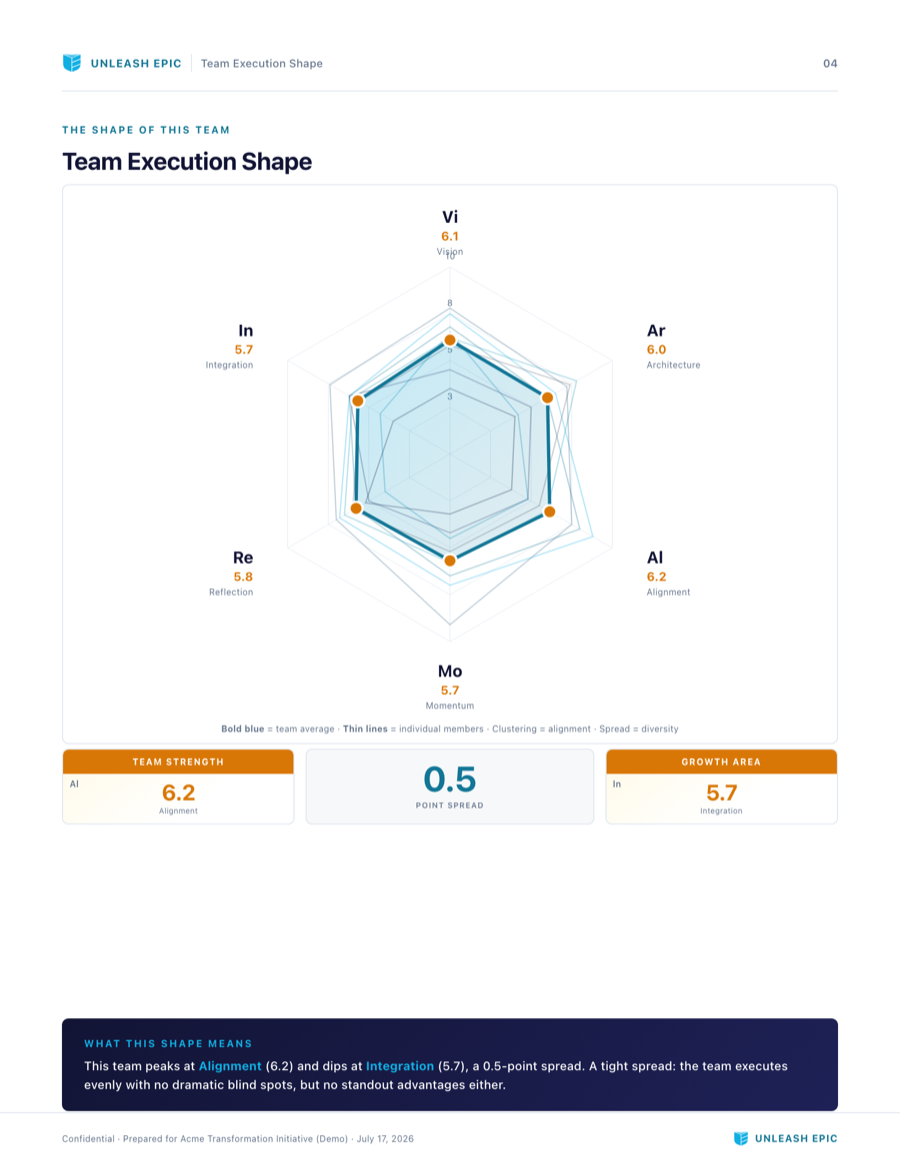
The Execution Index shows how each person moves through six phases of execution. The team view reveals shared strengths and the phases that may affect the work the team chooses.
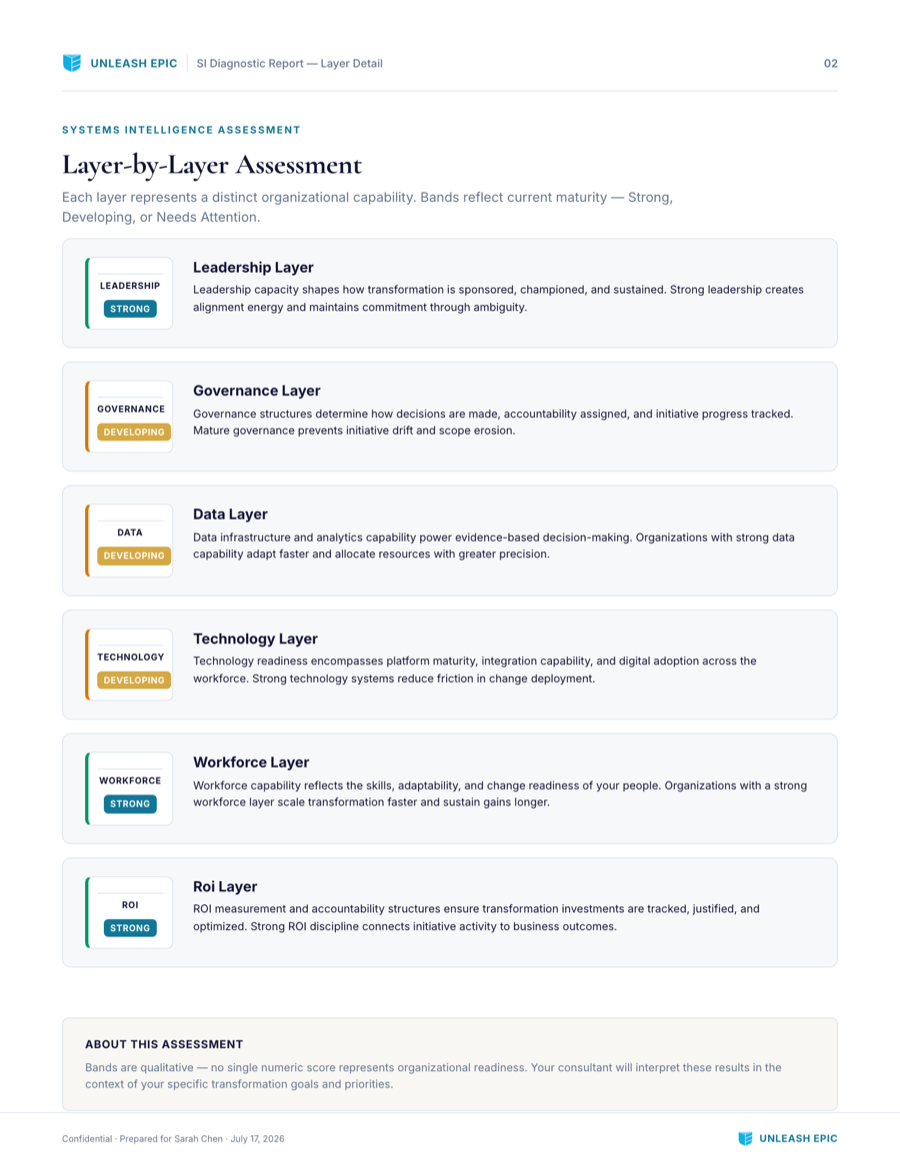
The systems reading covers Leadership, Governance, Workforce, Data, Technology, and return on investment. It shows the conditions that support the work and the ones that need attention.
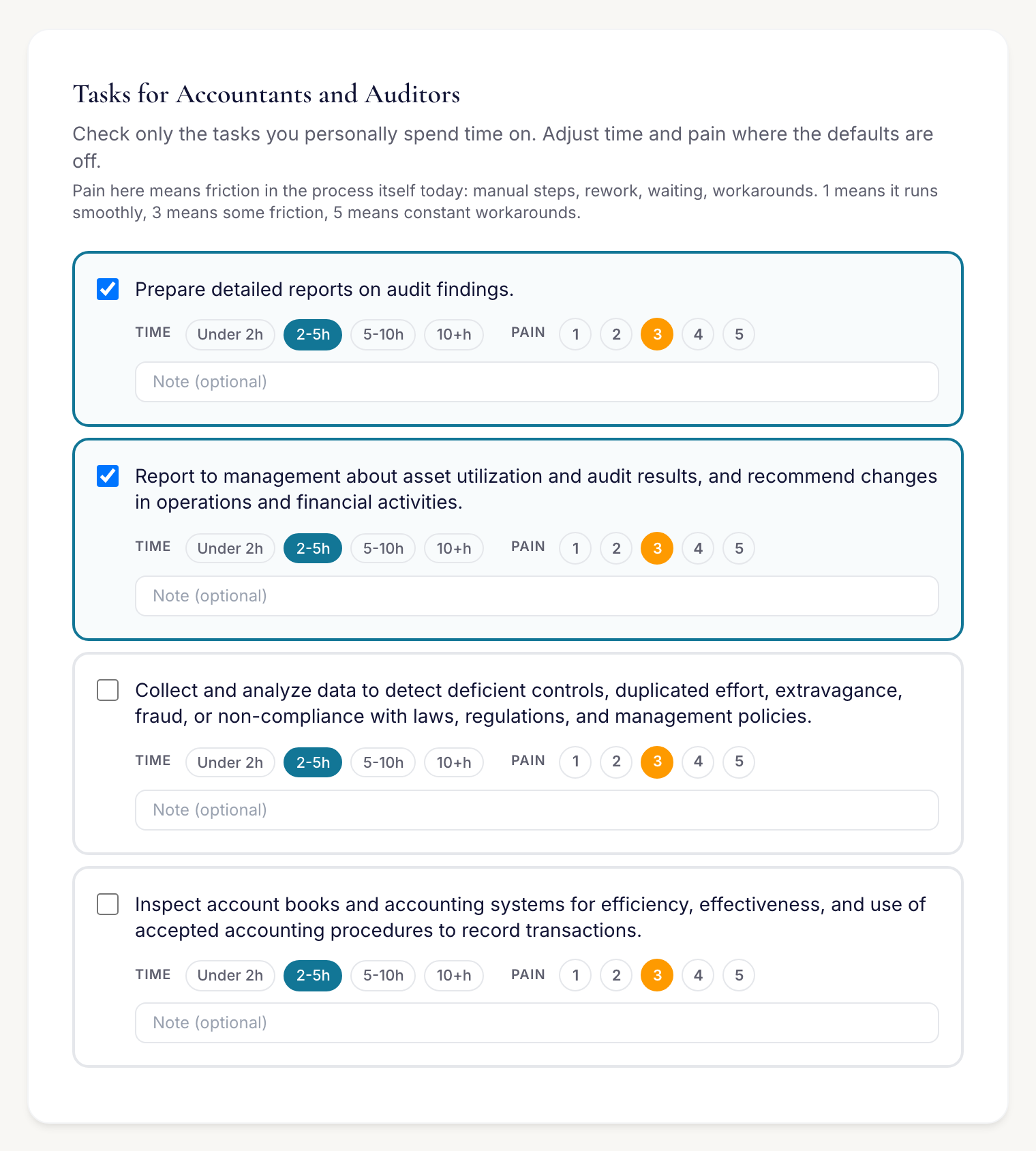
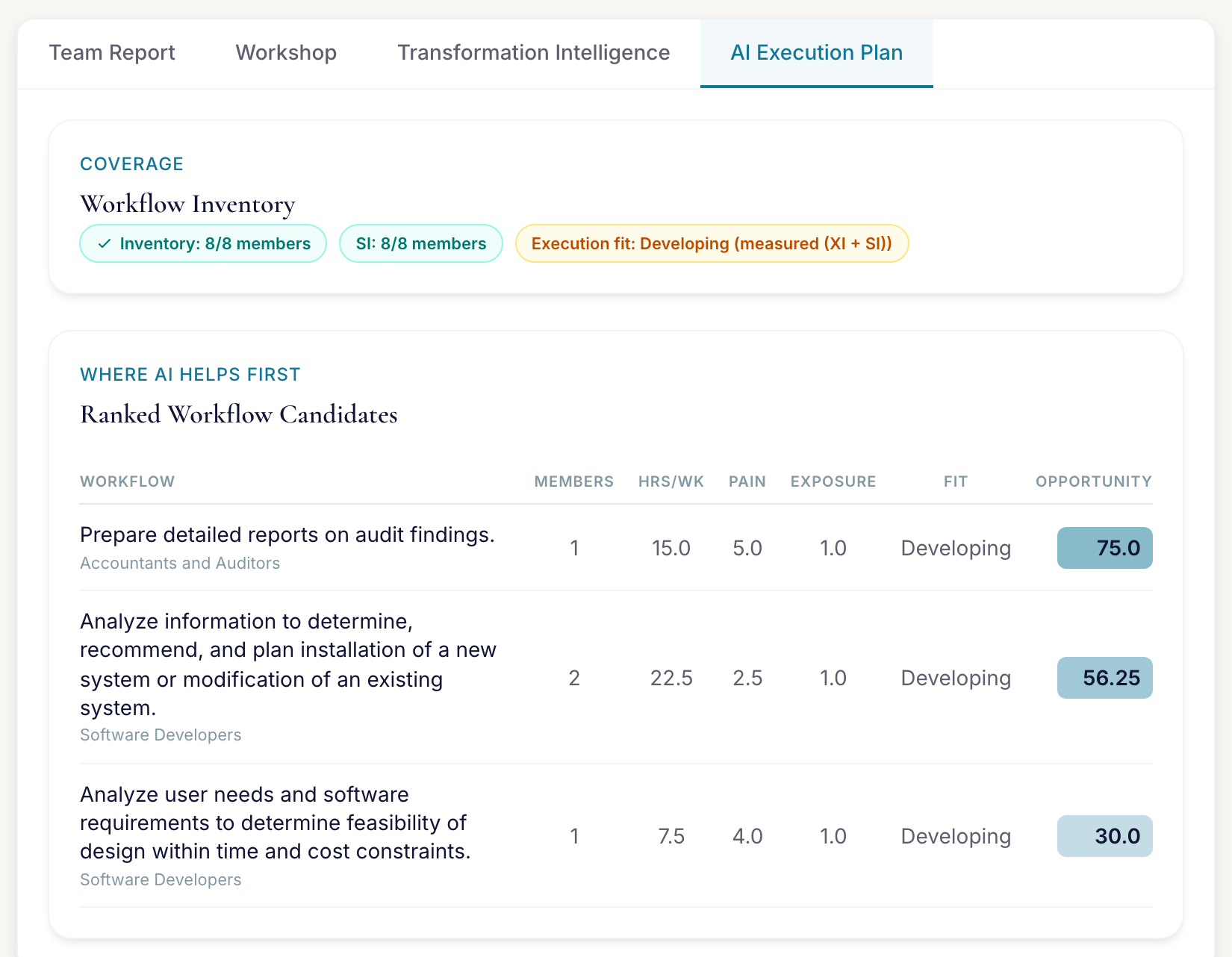
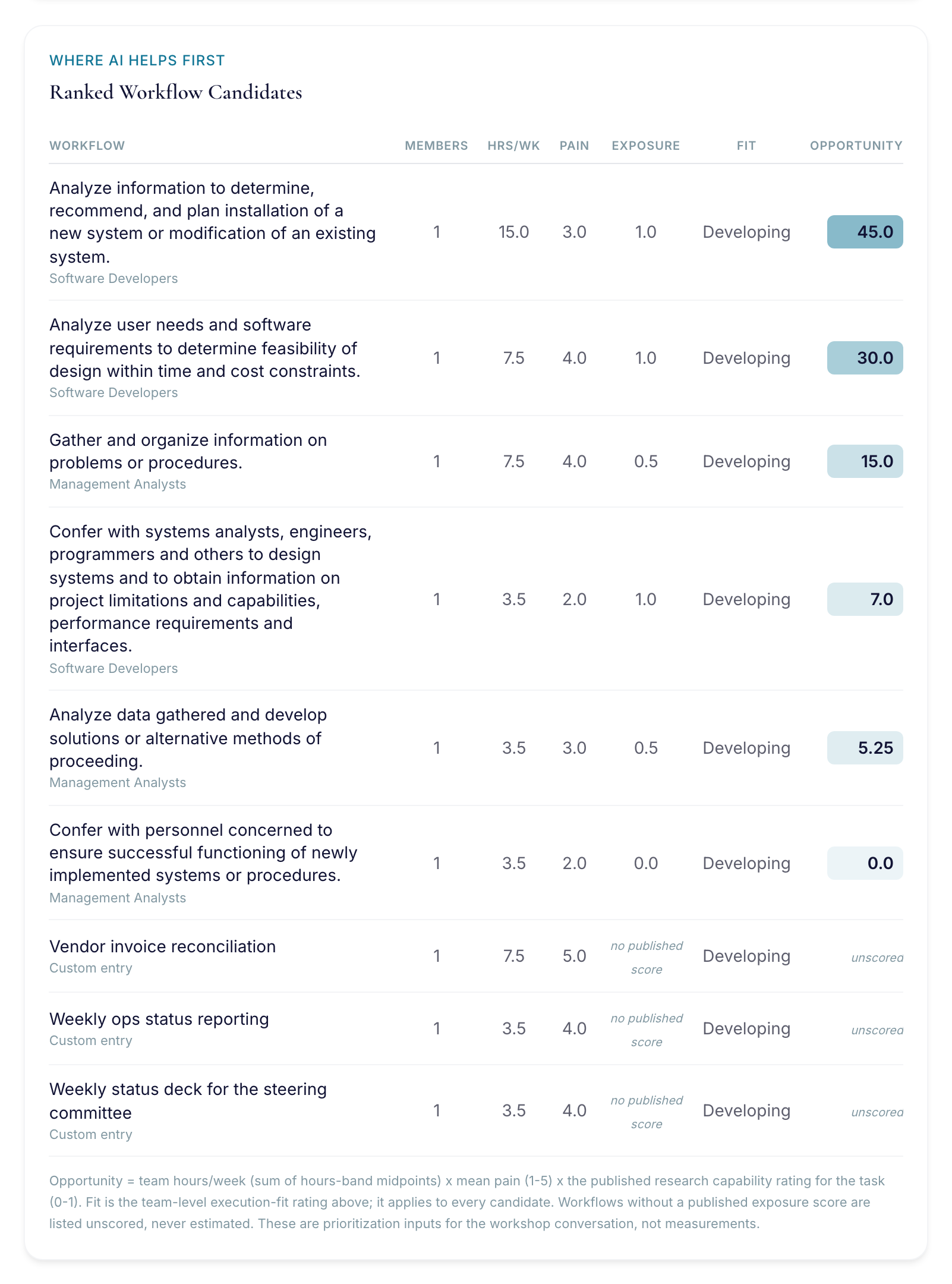
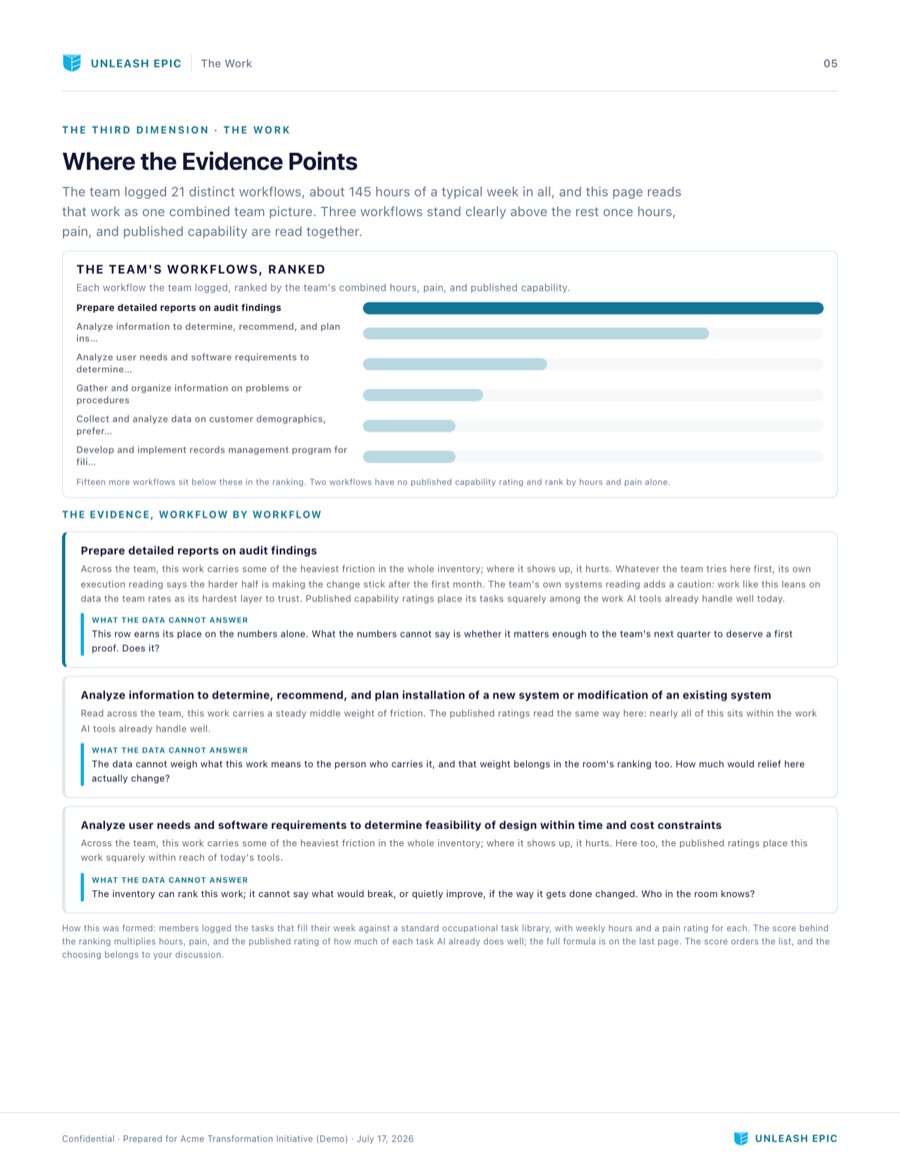
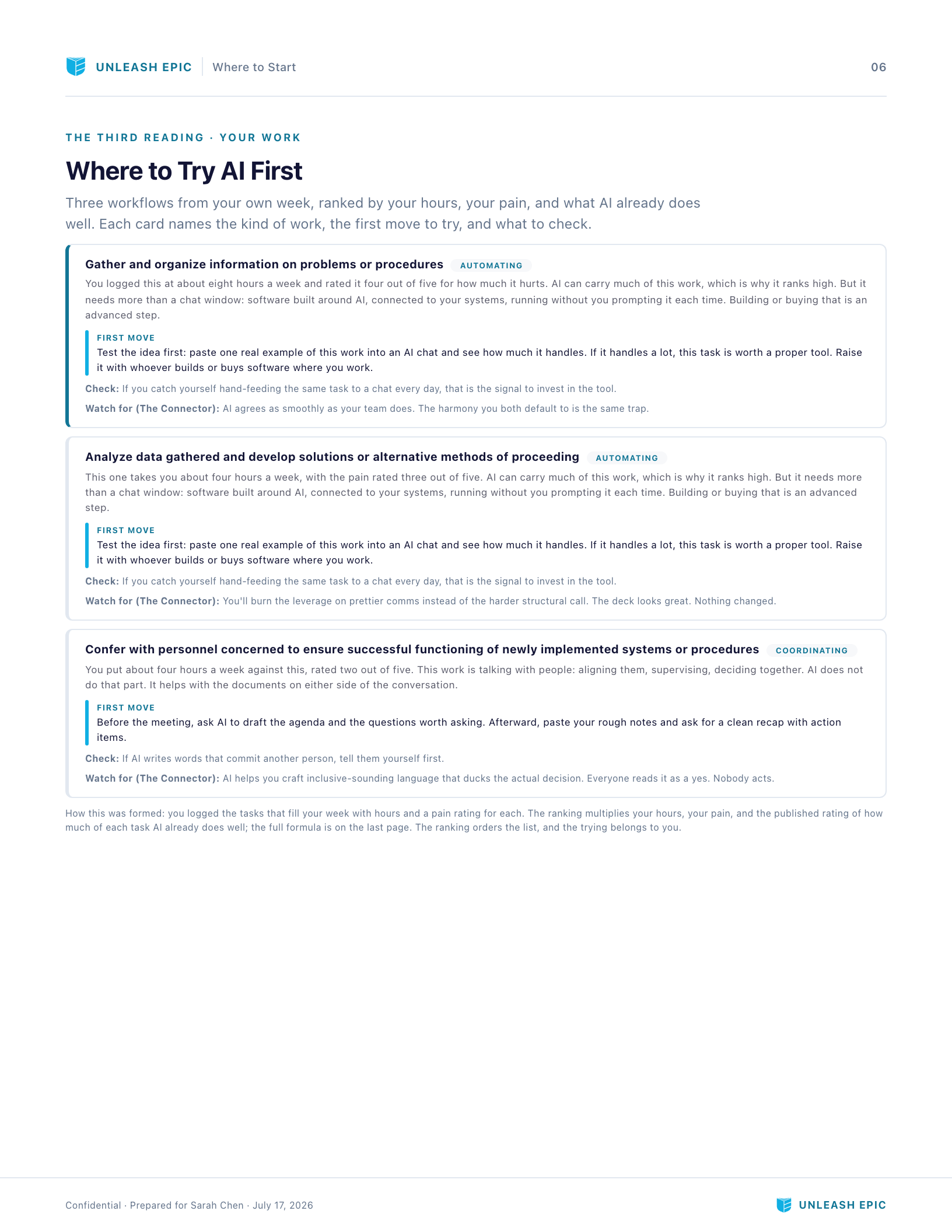
The Workflow Inventory records tasks, time, and process friction. XI combines those inputs with published AI capability research to rank work the team recognizes.
The first of the three readings is free.
Take the Execution Index and receive your results, diagnostic report, and shareable profile.
Individual results reach the team only in blended form.
Step three: put the readings together
XI ranks opportunities from work the participants reported. In the workshop, the team considers those opportunities alongside how its people execute and the systems surrounding the work. The team chooses the scope that makes sense and agrees on what happens next.
Step four: make the decision as a team
The engagement lead helps the team understand the conditions behind its decision. The team moves forward with a clear plan and returns after thirty days to decide what follows.
Confirm the scope, the people involved, tool access, operating conditions, and the review date.
Put the decision into practice on real work. Capture what the team learns and what gets in the way.
Use the results to decide whether to expand, adjust, or stop.
What the team keeps
The documents carry the readings, the ranked work, and the guidance the team needs for the workshop and the decisions that follow.
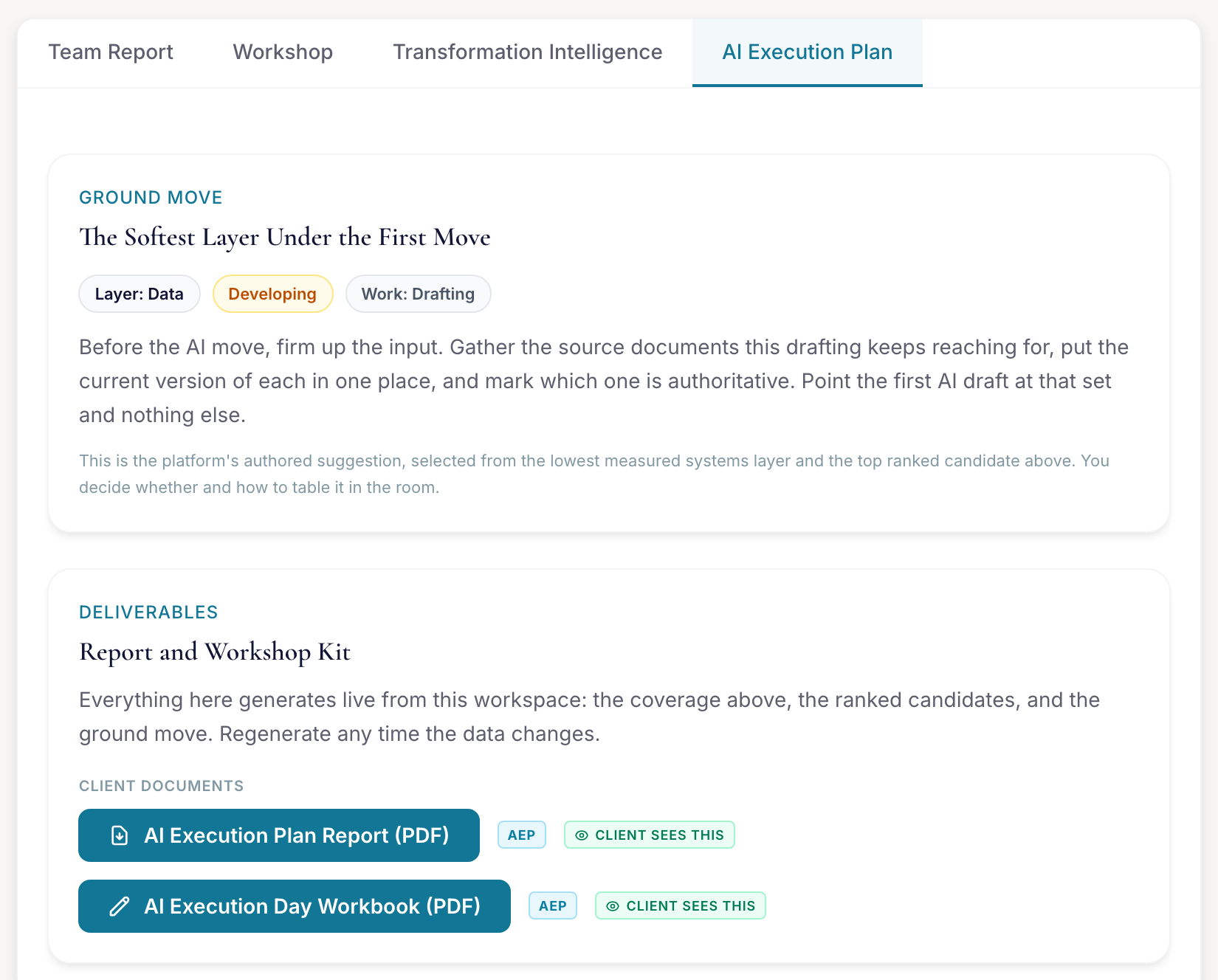
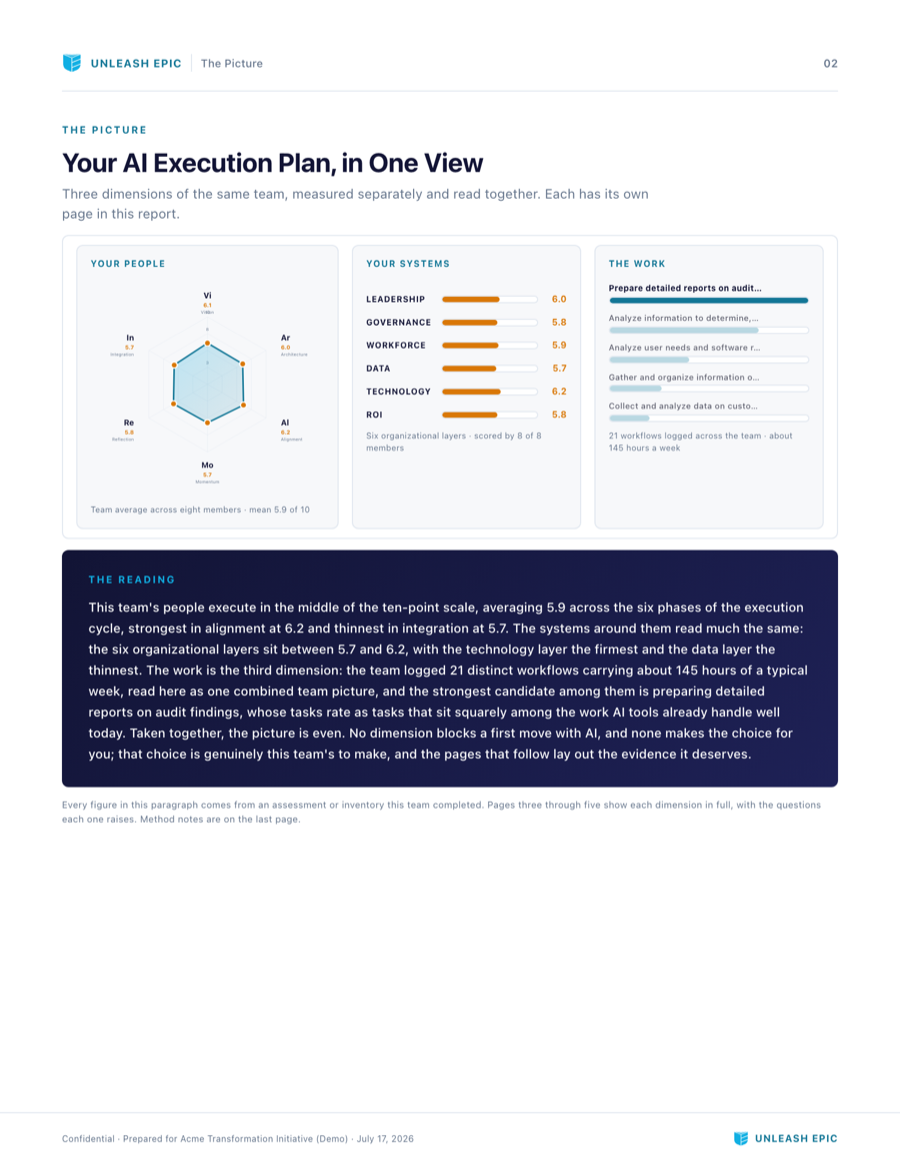
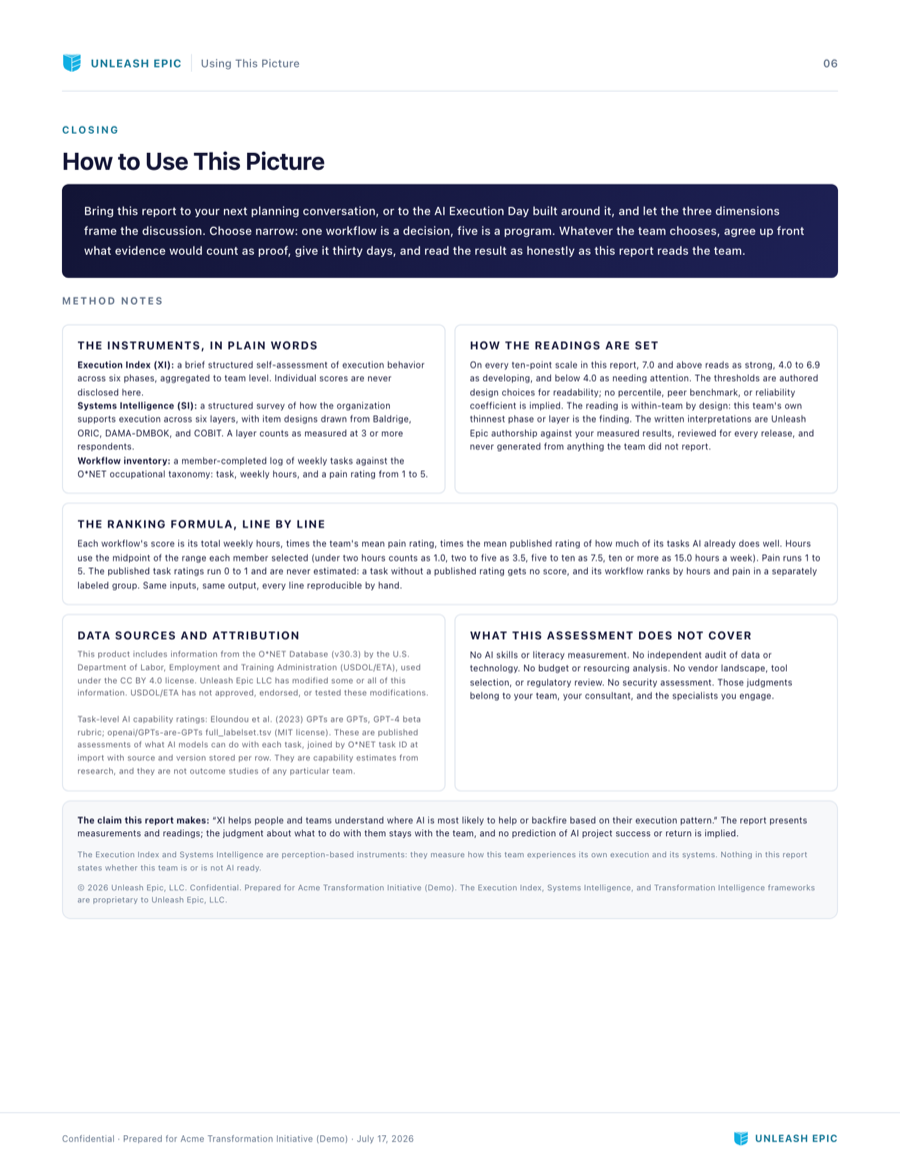
The people, systems, and work in one report, followed by ranked candidates and a guide for using the reading.
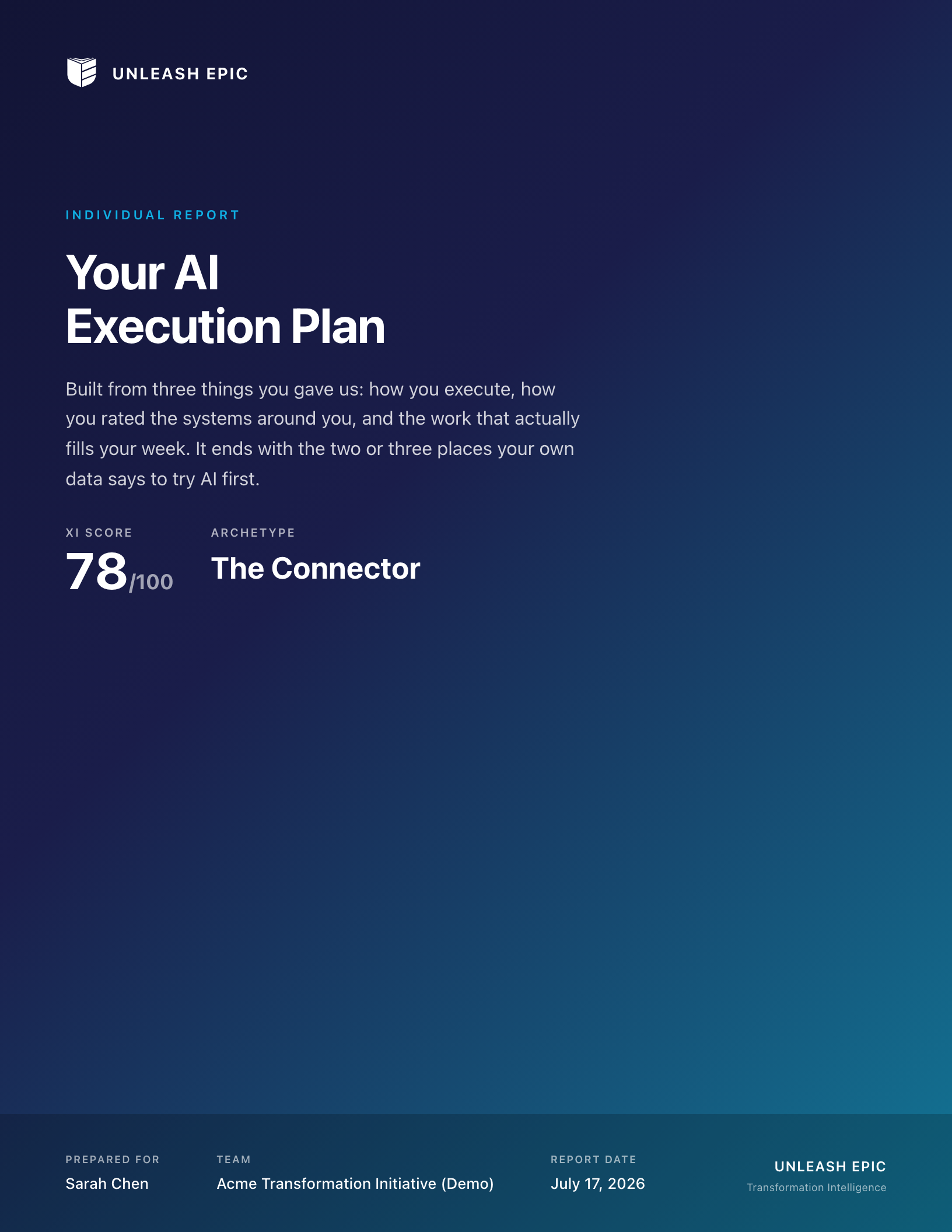
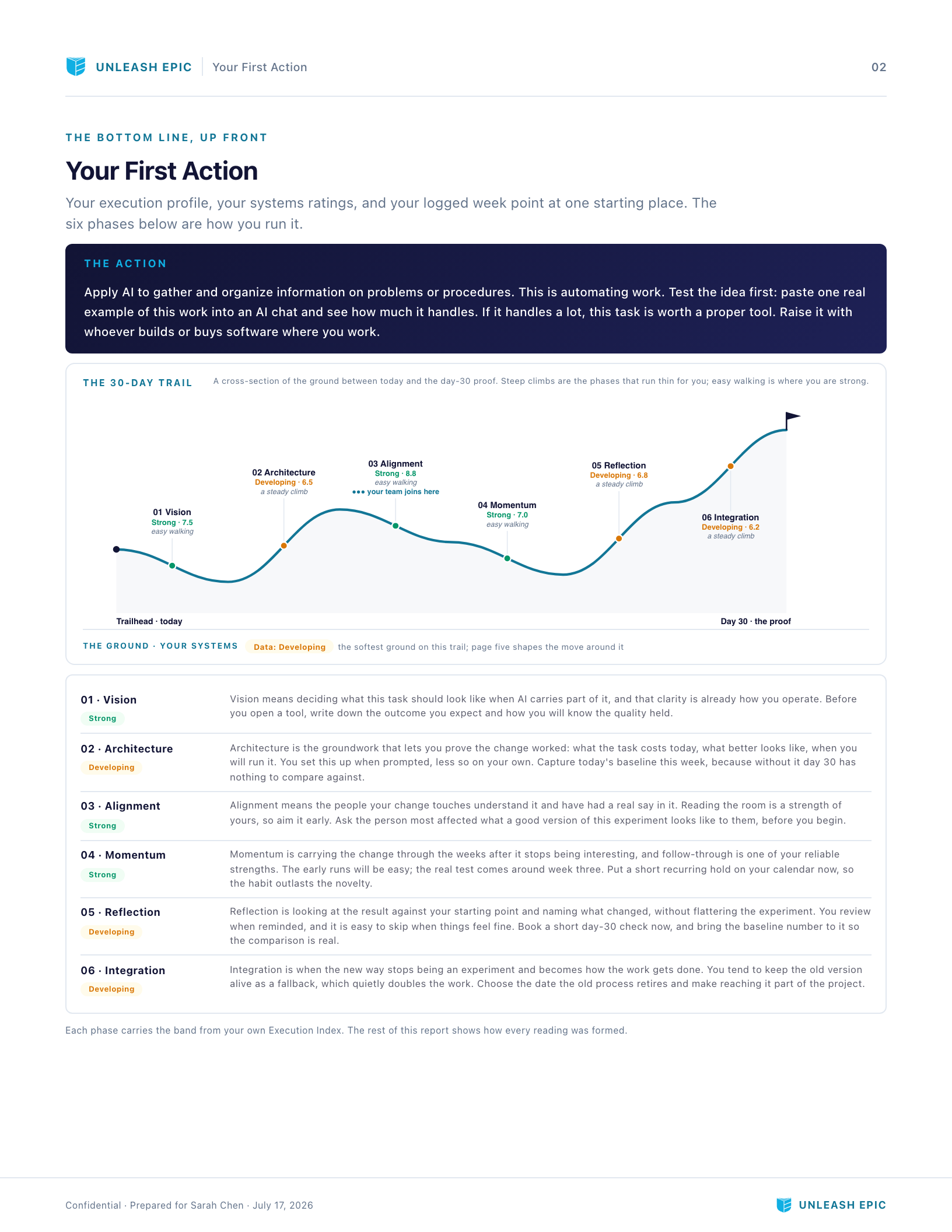
One first action from the person's own week, their execution path, and a focused set of places to try AI.
What changes
The team can compare tools, support, governance, training, and process changes against the scope and outcomes it chose. The next conversation has a concrete focus and evidence from real use.
What leaders find
The first reading shows each person how they move work. The team view reveals the strengths and gaps they share.
“It showed me exactly where I needed to focus. In a word: winner.”
Head of Product
Funded AI startup
“It helped my team see where we shared strengths, and surfaced blind spots we had been missing.”
P&L owner
Fortune 500
“Surprisingly simple to take, and genuinely useful for individuals and teams alike.”
Head of Training and Development
$3B consumer goods company
Questions
It is a guided team engagement built from three readings: how people execute, the systems around them, and the work they actually do. The readings prepare the team to make a clear decision together and turn it into a practical plan.
You can begin while comparing tools, while using tools already available, or while reviewing a pilot. The workflow and desired result give the technology decision a clear job.
Each person completes the Execution Index, the systems reading, and the Workflow Inventory. The three readings take about twenty-five minutes in total. The team then joins a guided decision session.
Each person receives their own reading. Individual results reach the team only in blended form.
The Execution Index measures how a person moves work from direction to a finished result. The full plan adds the systems around the team and the tasks that fill the week.
The first of the three readings is free. The full team engagement is scoped with the consultant or strategic partner leading the work.
The engagement lead reviews the results with the team. Together they decide whether to expand, adjust, or stop.
Start with the live question
A short conversation will identify the question, the people who should be involved, and the result worth measuring.