01
Align around one live client question
Name the client decision, the executive sponsor, why it matters now, and who needs to be in the room.

For firms helping clients put AI to work
The AI Execution Plan gives your firm a paid engagement for helping a client choose a practical scope, bring the right people into the decision, and agree on what the next thirty days need to prove. You keep the relationship and deliver the implementation, advisory, or managed work that follows when the evidence supports it.
Talk through a client questionBring a real situation. We will see whether the plan gives your client a useful next step.
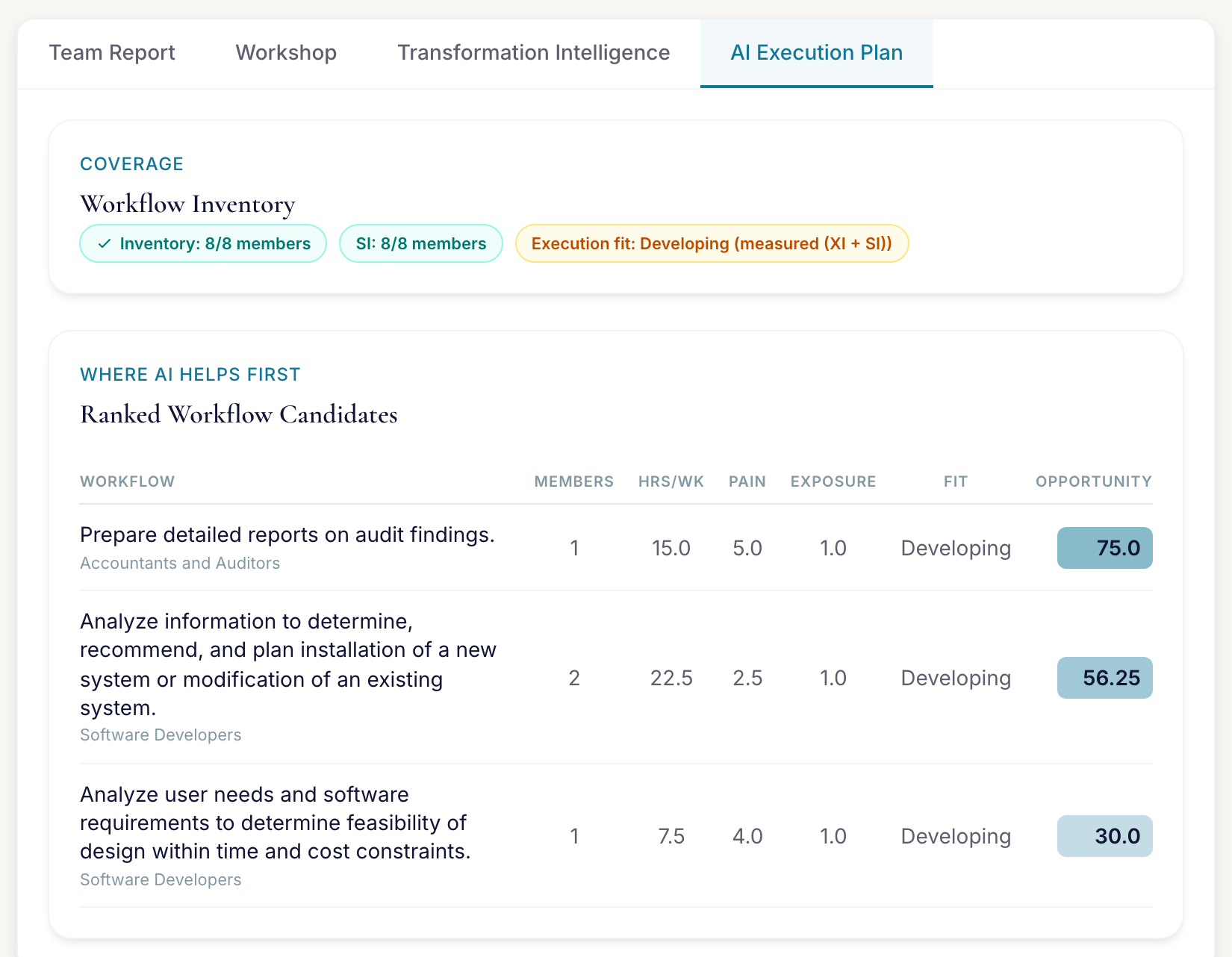
The Acme demo team's live AI Execution Plan workspace.
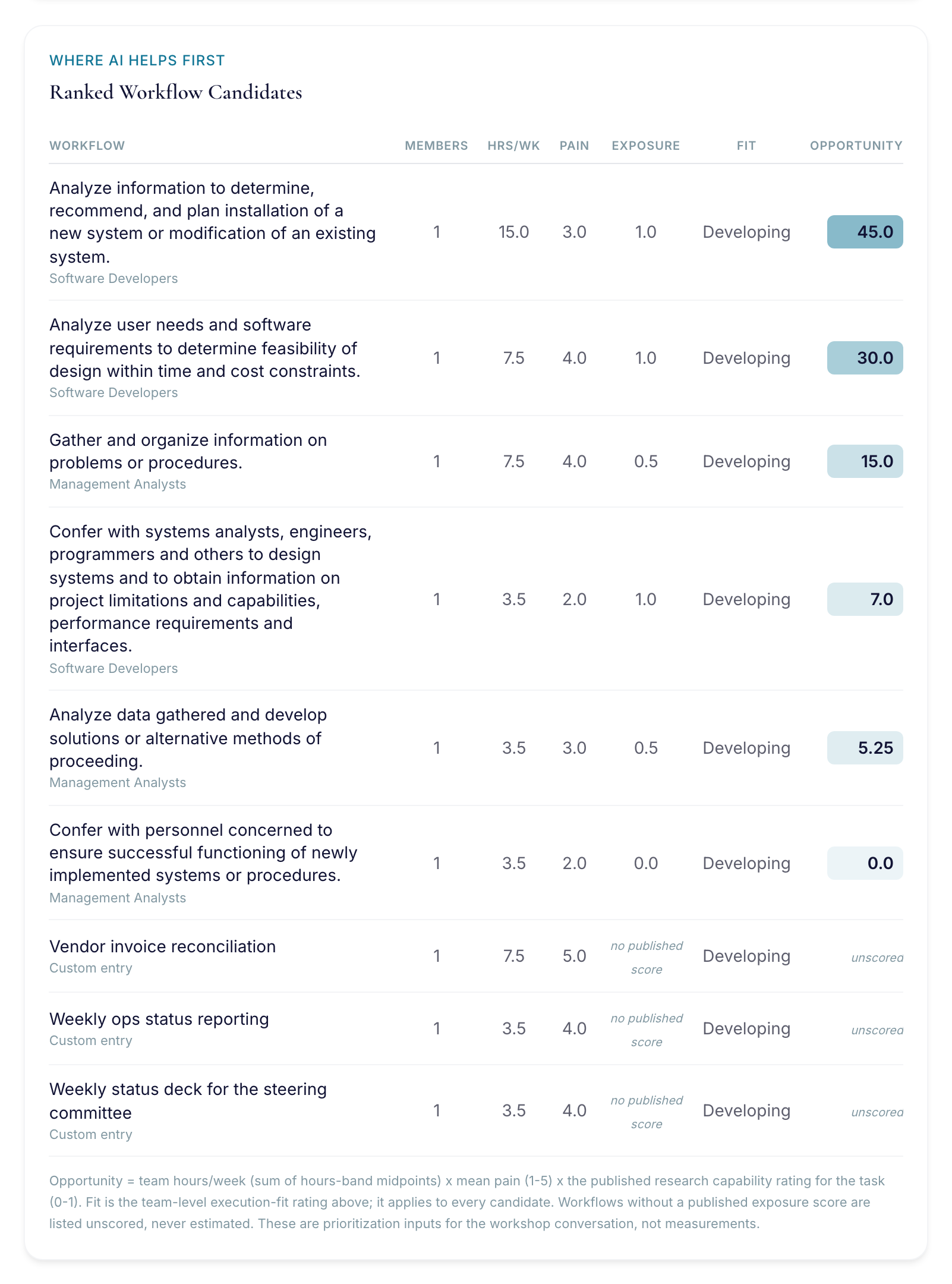
XI confirms the readings, calculates execution fit, and ranks the work from the team's own inventory.
Where it fits
Use it as the first paid engagement, or put it at the front of work already in scope.
In either case, the AEP helps the client decide where to begin before anyone commits to a tool, rollout, or larger program. You set the client price, keep the account, and carry forward the work your firm is qualified to deliver.
How we start
One real client gives us what we need to shape the offer, divide responsibility, and decide whether a broader rollout makes sense.
01
Name the client decision, the executive sponsor, why it matters now, and who needs to be in the room.
02
We learn your services and products, who owns each one, and which client signals could support a responsible handoff.
03
We choose the delivery lead, complete the three readings, prepare the room, and help the client choose a practical scope, the people involved, and the evidence it will review after thirty days.
04
We compare the result with the terms the client set, identify appropriate follow-on work, and refine the roles and commercial model.
05
You can keep using assisted delivery, roll the offer out more broadly, or prepare a named employee to earn independent practitioner status through observed work.
How it connects to your catalog
We map that connection before the first engagement. The client's evidence determines the route, and your team verifies every recommendation that depends on the client's environment.
What one client engagement produces
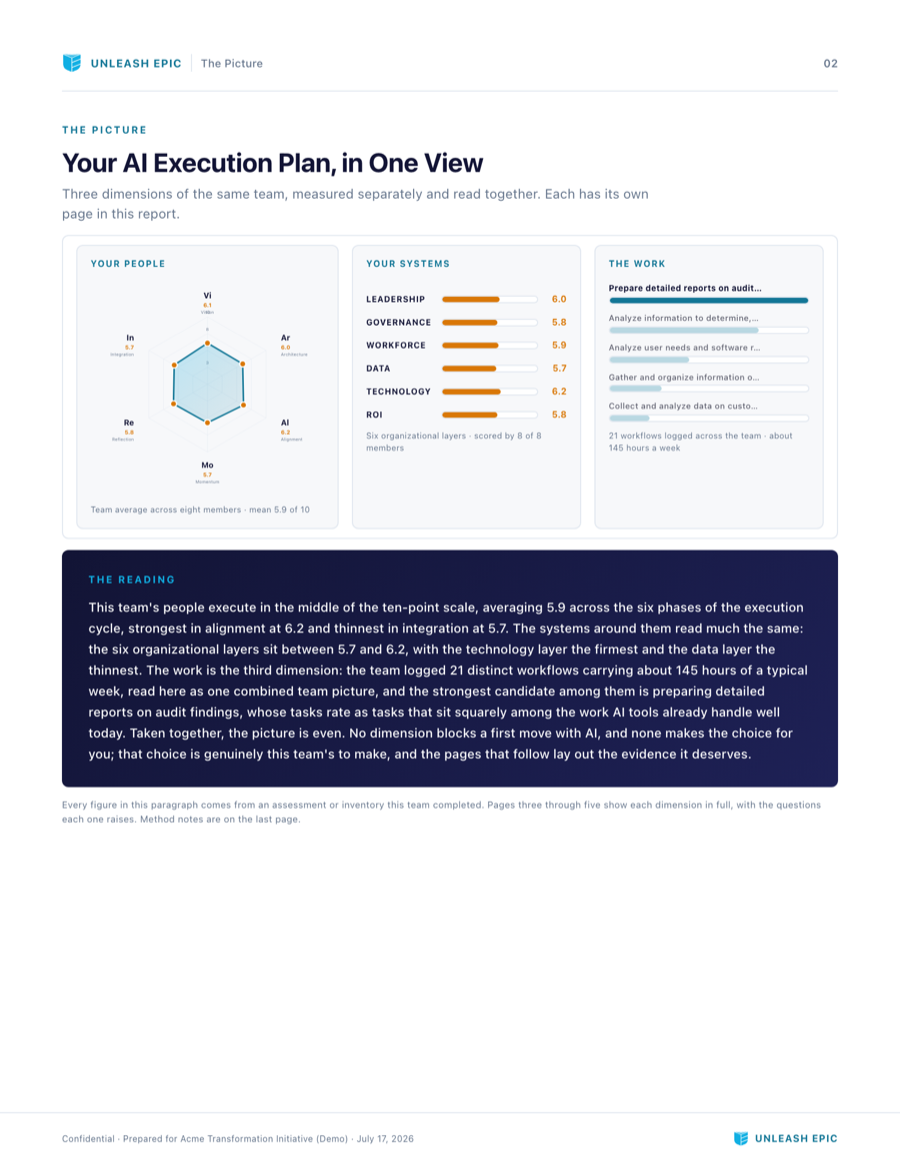
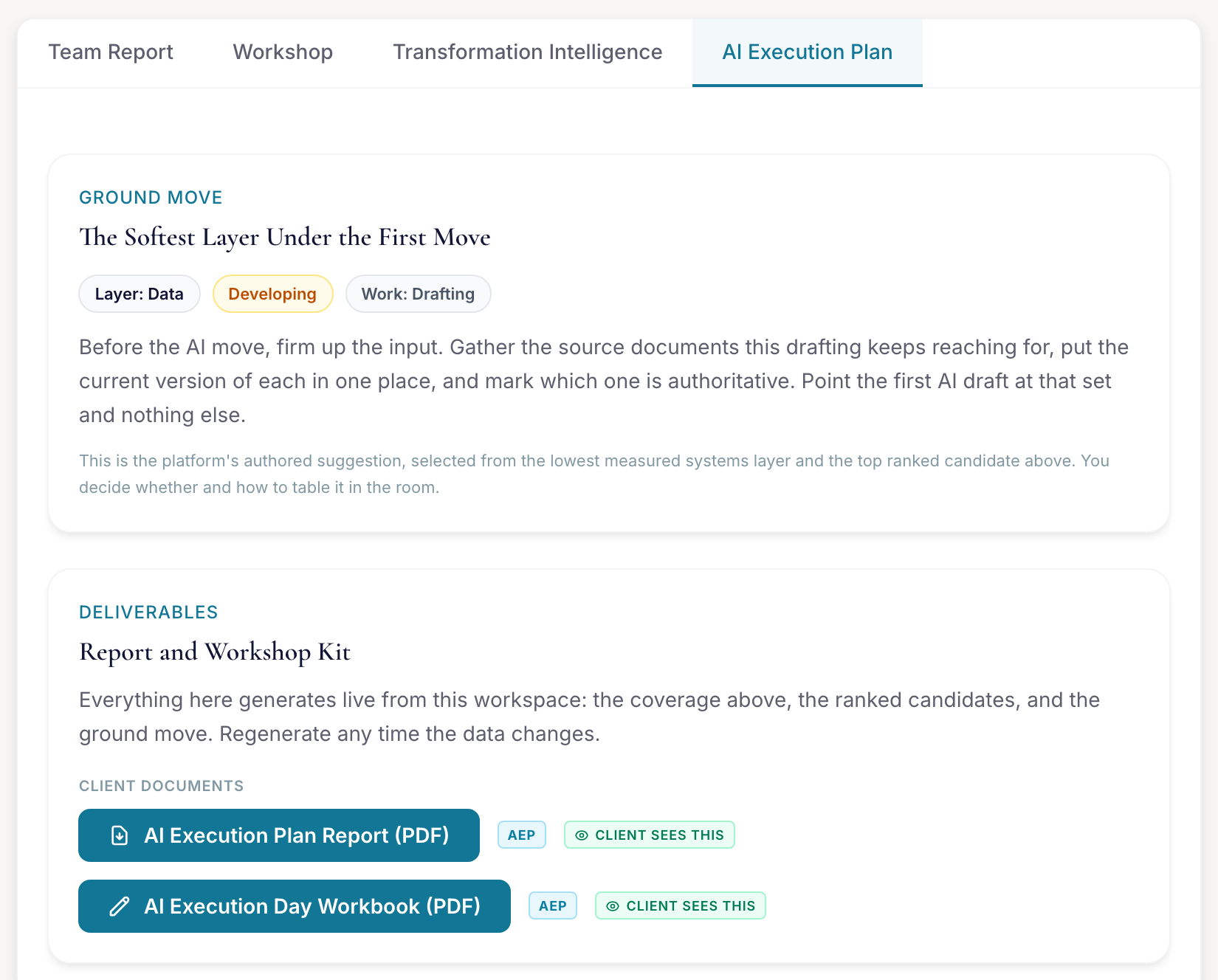
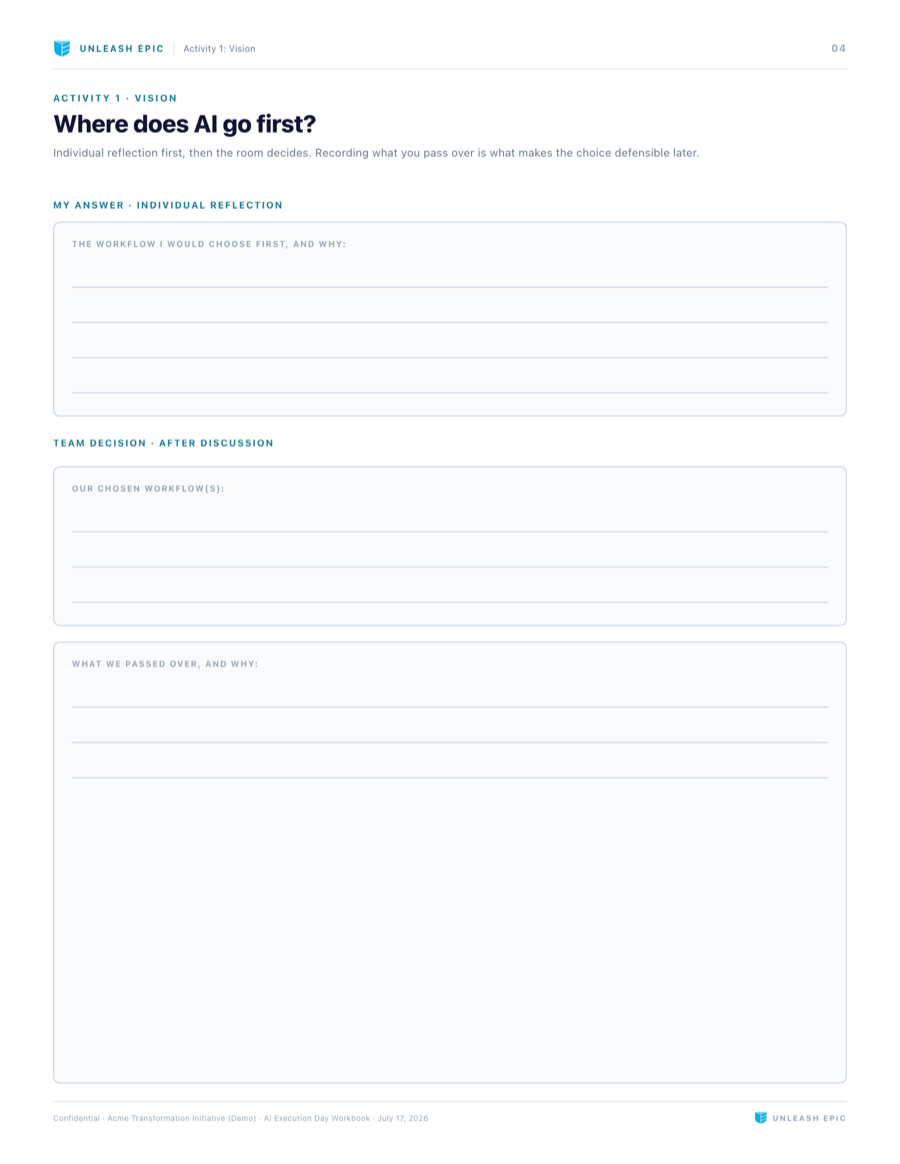
The client's three readings become the reports, slides, facilitator materials, and participant workbook for the AI Execution Day. Your team brings the relationship, the context, and the professional judgment.
Who owns what
We own the platform, the integrity of the three readings, the AEP method and materials, and our part of assisted delivery.
You own the client relationship, verify the client's environment, deliver the work your expertise supports, and keep the continuing account.
The client chooses the scope, the people involved, what the next thirty days need to prove, and the judgment at the review. The readings support that decision and leave it in human hands.
You can start before someone on your team qualifies for independent delivery. We help shape the first engagement and put the right delivery owner in the room while your practitioner learns through the work.
Yes. You may sell the plan on its own or include it in a broader scope. You control the client price and own the continuing relationship. We make sure the scope and promises stay accurate.
Before the first engagement, we map your catalog and the client signals that may point to each offer. The client's readings determine the first move. When the evidence reveals a need that matches your expertise, we prepare a clear handoff.
We watch them do the work. A qualified practitioner can prepare the client, lead the room, explain the readings without overclaiming, establish the proof terms, and return at day thirty without Unleash Epic protecting the engagement.
Bring one client AI question that is already live, the relationship context, and a plain description of what your firm could deliver if the need is there. You do not need a finished offer or a volume commitment.
The first conversation